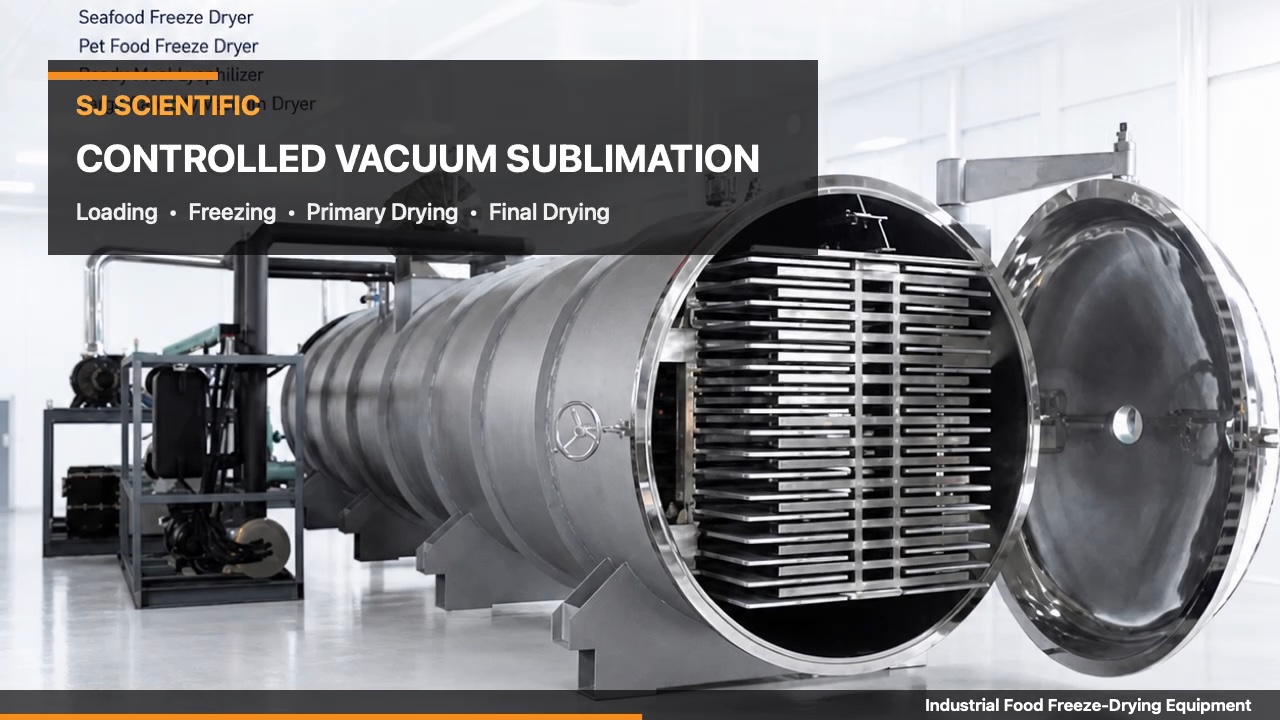
A business is ready for a larger freeze dryer when measured production data, not optimism, show that compact batches are the constraint. This guide uses an FFD-100 product visual overview to show the next equipment class while keeping the decision anchored to the H Series records a small producer already has: product dimensions, tray loading, water removed, full turnaround, labor and saleable output.
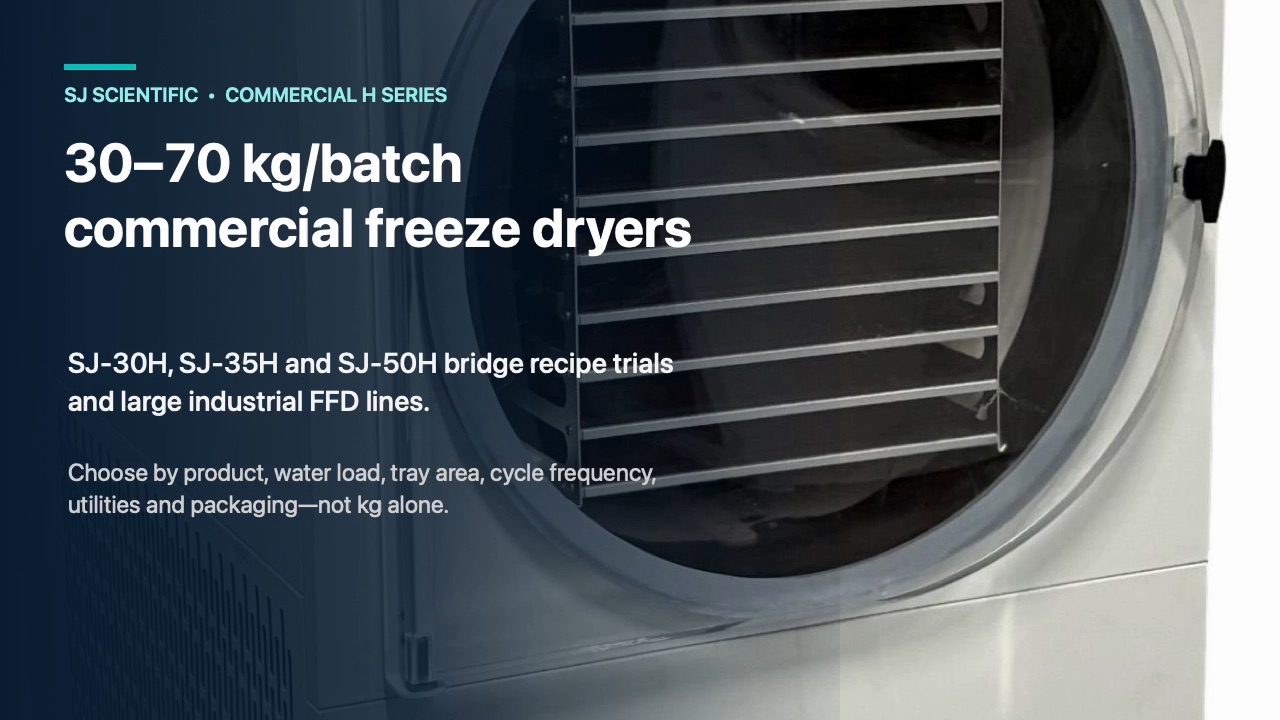
A short comparison of the commercial H Series path between compact recipe work and a dedicated industrial FFD project.
Equipment and application views
Scale because measured demand exceeds the compact workflow
Track prepared fresh kilograms, finished saleable kilograms, batches per week, complete turnaround, labor hours, energy, rework and packaging delays for at least one representative product. Repeated sold-out production with a stable recipe is stronger evidence than a forecast alone.
Keep the H Series for product trials and smaller orders if it still does that job well. Moving every recipe into one large chamber can reduce flexibility and make a failed development batch much more expensive.
Check which step is actually limiting output
The dryer may not be the bottleneck. Cutting, cooking, pre-freezing, tray loading, unloading, moisture testing or packaging can cap weekly sales. Draw the complete batch timeline and mark where product or labor waits.
If packaging cannot absorb one industrial discharge, increasing chamber size can expose more dry product to humidity. Upgrade the line as a system rather than buying shelf area in isolation.
Transfer the product record, not only the old recipe
Carry forward initial moisture or solids, piece size or fill depth, kilograms per tray, frozen condition, target endpoint, product-temperature observations and finished quality. Use those data to estimate industrial water load and shelf area.
A compact recipe cannot be copied unchanged to a large FFD. Heat transfer, vapor path, condenser duty, loading geometry and instrumentation differ. Plan an engineering or commissioning basis for the new scale.
Confirm the facility can support industrial equipment
Industrial FFD projects add voltage, phase and frequency review, cooling, drainage, service access, foundations or floor loads, shipping and rigging paths, cart movement and a defined defrost and cleaning route.
Ask who supplies and connects each utility, what will be tested at FAT and SAT, which product or surrogate will be available, and where remote support ends and site work begins.
Choose the next class before choosing a specific model
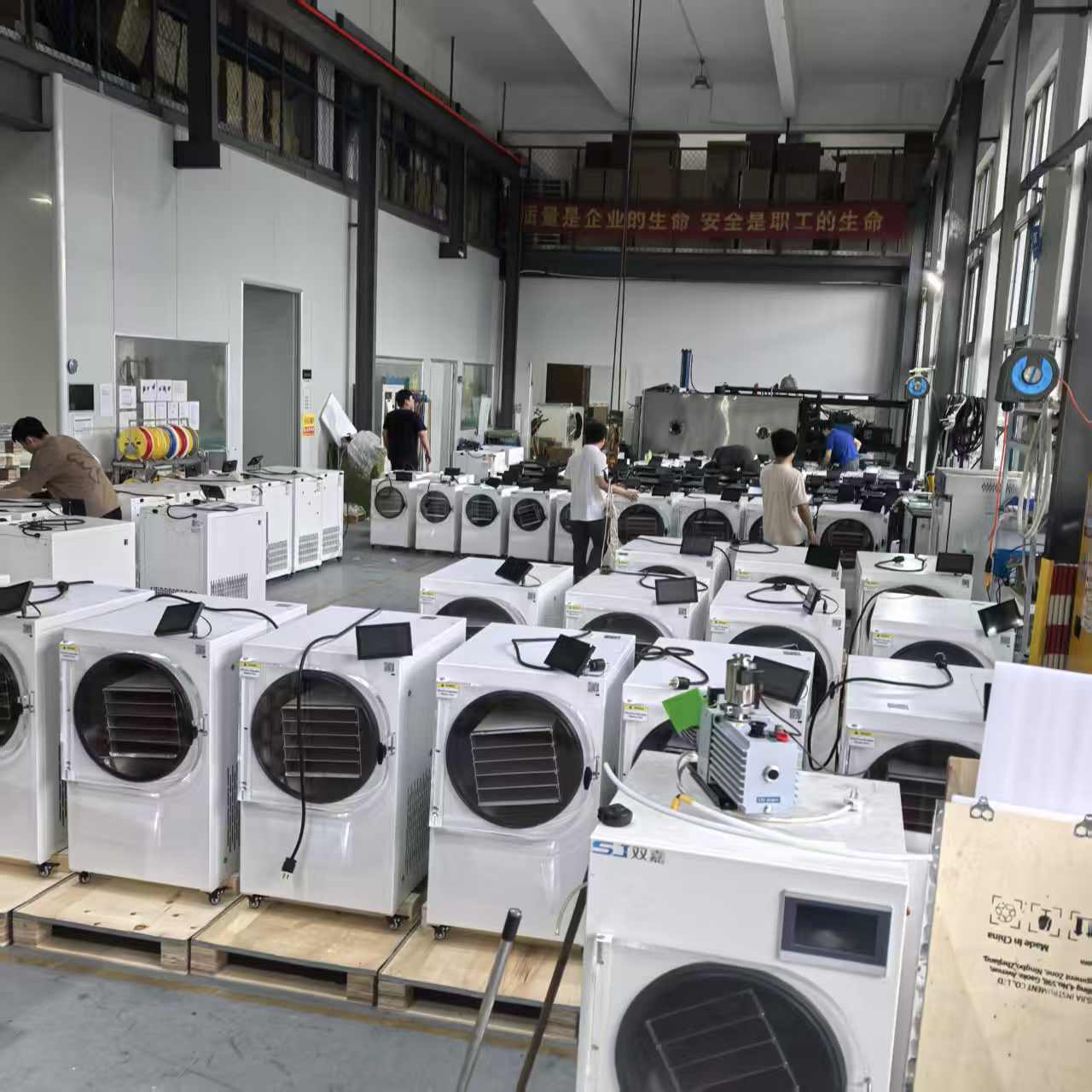
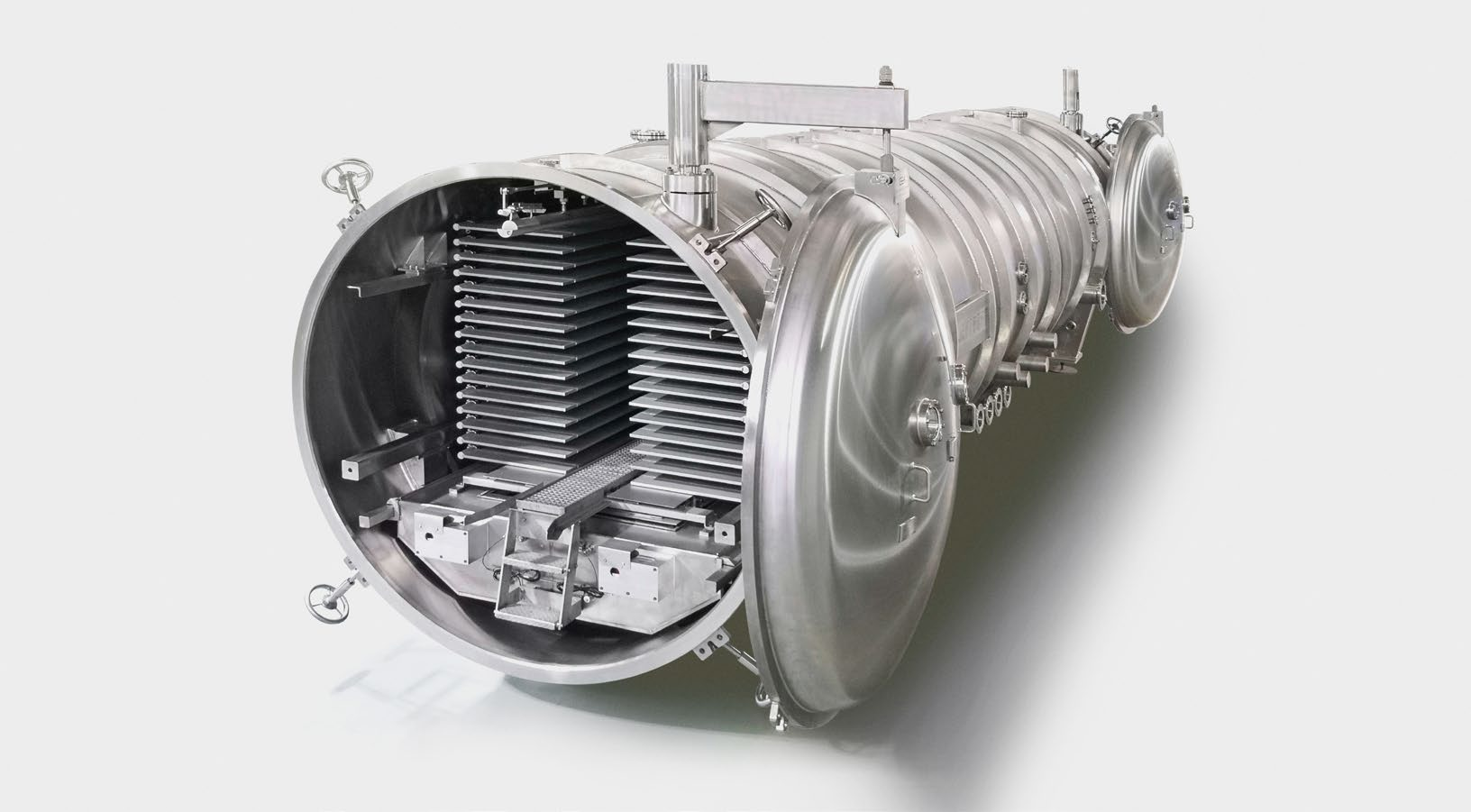
Commercial H Series equipment can suit recurring small production when cabinet-scale loading remains manageable. Cylindrical FFD systems suit factory projects that justify carts, large tray areas and dedicated utilities. The transition is not one magic kilogram number.
Send the measured product and site worksheet to the industrial team. ArcticDry Tech owns the large-FFD engineering path so this small-equipment guide does not pretend to provide a final FFD selection.
Frequently asked questions
How many compact freeze dryers equal one industrial FFD?
There is no reliable universal conversion. Compare water removal, shelf loading, complete turnaround, utilization, labor, utilities and packaging capacity for the actual product.
Should I stop using the H Series after buying an industrial FFD?
Not necessarily. A compact machine can remain useful for recipe development, limited products, samples and production backup.
Does the FFD-100 video show a real customer line?
No. It is presented as a product visual overview for equipment-class and layout discussion, not as a customer-site case or performance test.
This page provides general engineering and operating context. The model-specific manual, approved site procedure, technical agreement and product validation take priority.